Here's our position before the advice, so you can weigh the advice: we are photographers, we do not sell video, and we earn nothing either way from your answer. The honest answer from behind our cameras is this: if the budget holds it comfortably, hire a videographer, because film keeps the two things photography cannot, voices and movement. If hiring one means starving the essentials, skip it without guilt; in our market it is the most commonly skipped major vendor, and the weddings that skip it are not lesser weddings. The rest of this guide is the detail under that answer.
· planning guide ·
Do you need a wedding videographer? An honest answer from the photo side.
We don't sell video, so we have no stake in your answer. What film gives you that photographs can't, what it costs in Utah, and when we'd honestly tell you to skip it.
· contents ·
What's in this guide.
· what does video give you that photographs cannot? ·
What does video give you that photographs cannot?
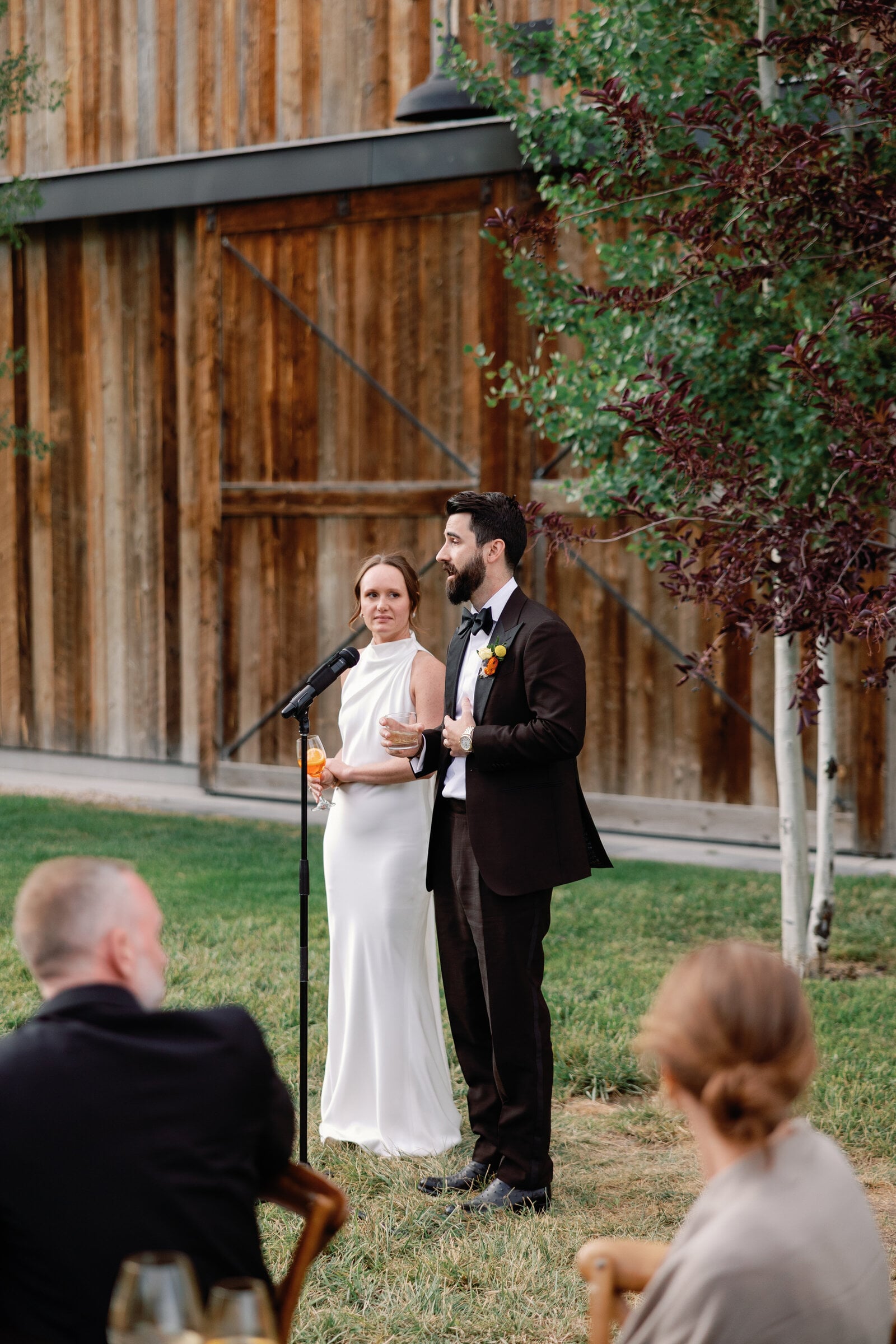
Voices, first and most. A photograph of your grandfather's toast preserves his face; a film preserves the way he said your name. Vows are the sharpest case: most couples are so flooded during the ceremony that they genuinely cannot recall what was said an hour later, and the film is the only way those exact words, in those exact voices, survive. We have watched couples replay a vow film and hear sentences they had no memory of. A photograph cannot do that, and we won't pretend otherwise.
Movement, second. The way your dress moved when you turned, the way your father danced badly and committed to it, the half-second when the flower girl bolted. Photography keeps the peak of a moment; film keeps its motion and timing, the before and after that make a moment funny or tender rather than just visible. Some weddings are full of that kind of kinetic life, and those weddings reward film disproportionately.
To be precise about the trade in the other direction: photographs are better at being lived with. They hang on walls, sit on desks, and get reopened constantly, while most wedding films are watched a handful of times in the first year and then on anniversaries. Both patterns are real and neither is an argument against the other. They're different instruments for keeping the same day.
A photograph keeps his face. A film keeps the way he said your name.
· what does a wedding videographer cost in utah? ·
What does a wedding videographer cost in Utah?
In our market, basic videography typically runs $1,200 to $1,800: one videographer, a shorter highlight edit, and at this tier you'll also find some temple-only packages. The mid-market runs $2,000 to $3,500 and is where most hired video in Utah lands: a five-to-eight-minute highlight film with full-day coverage from one videographer. Premium cinematic work runs $4,000 to $6,000 and up, with multiple shooters, longer films, drone coverage, and same-day edit options.
Those ranges are consistent across several Utah studios' published pricing, and they sit comparable to or slightly above the national mid-market. For context against the photo side: Utah photography runs $1,500 to $2,200 at the budget tier and $2,500 to $4,000 mid-market, so a mid photo plus mid video pairing is roughly $4,500 to $7,500 of combined budget. That arithmetic is most of why the skip-it question exists at all.
One pricing note worth knowing: the cheapest tier of video is a thinner product than the cheapest tier of photography. A budget photographer still delivers hundreds of finished images; a budget videographer delivers a short edit, and the difference between a three-minute highlight and a film that includes your full vows and toasts is exactly the part you'd hire video for. Read the deliverables, not just the price.
· when we would honestly say skip it ·
When we would honestly say skip it
Skip it when it crowds out essentials. On a tight Utah budget (say the $14,000 tier we work through in our budget guide), a $2,000 videographer is the difference between a mid-market photographer and a budget one, or between feeding your guests well and not. Video is a beautiful addition to a funded wedding and a bad trade against the foundations of one. In our market it is the most commonly skipped major vendor, which means skipping it puts you in the company of most Utah couples, not in an asterisked minority.
Skip it, too, if you already know you won't watch it. Some couples are honest with themselves that they live with printed photographs and would file a film away. That self-knowledge is worth real money. And a middle path exists that costs nothing: ask a friend to record the full ceremony audio and the toasts on a phone from a tripod in the back. It isn't cinema, but it preserves the voices, which is the part you'd grieve.
Prioritize it when the day is voice-heavy or once-only: personal vows, a parent whose toast you already know will wreck the room, family traditions with music and movement, grandparents whose voices you want kept. Couples who report regret about skipping video almost always name one of those, not the drone shot. If one of them describes your day, move video up the list and cut somewhere your guests can see less.
Video is a beautiful addition to a funded wedding and a bad trade against the foundations of one.
· how do photo and video teams share a wedding day? ·
How do photo and video teams share a wedding day?
Well, when three things are true. First, one lead at a time at the key moments. The first look, the vows, the first dance: at each, one team holds the primary angle and the other works around it, and the assignments are agreed before the day, not negotiated in the aisle. We've worked both sides of that arrangement and it's frictionless when it's explicit and miserable when it isn't.
Second, a shared timeline. Photo and video draw from the same scarce resources all day, the same golden-hour window, the same portrait block, the same fifteen minutes with the couple. When both teams plan from one timeline, the windows get used once and well; when they each build their own, the couple pays the overdraft in stress and rushed portraits.
Third, and this is the one couples control: tell each vendor the other exists, before the day, ideally before booking. Introduce us by email, share the timeline with both, and ask if we've worked together. We'll coordinate angles, lighting, and handoffs in one short call, and you will never see the seams. The two-crews-colliding stories you've heard all start the same way: each crew found out about the other at the venue.
· what should you ask a videographer before booking? ·
What should you ask a videographer before booking?
Ask: "Can you send a full film from one recent wedding, not a highlight reel?" Same logic as our advice for vetting photographers: the showreel is curated from many days; one complete delivery from one real wedding is the truth about what you'll receive.
Ask: "Who shoots my wedding, and who edits it?" Some studios send associates and outsource the edit. Neither is a scandal, but the edit is the product in video even more than in photo, so you want to know whose taste you're actually buying.
Ask: "What's the delivery timeline, in writing?" Video edits take longer than photo edits, and the horror stories in this category are overwhelmingly about films that arrive a year late or never. A real studio names a window and contracts it.
Ask: "What's your audio plan for the vows and the toasts?" This is the question that separates professionals from people with nice cameras. The answer should involve dedicated microphones (on the officiant or couple, and on the DJ's feed), not the camera's built-in mic from row five. If the audio plan is vague, the one thing you're hiring video for is the thing at risk.
And ask the boring ones that protect you everywhere: backup equipment, backup files, insurance, and what happens if they're ill on the date. The cheap end of video fails the same way the cheap end of photography does, not with a bad film but with no film.
· how do you budget for both photo and video without doubling the stress? ·
How do you budget for both photo and video without doubling the stress?
Start from the framework: photography and video together are conventionally allocated 10 to 12 percent of the total budget. On Utah's median-range wedding, that allocation funds good photography alone, which is exactly why video is the most commonly skipped vendor here, and why pretending both fit every budget would be selling you something. If both matter to you, the honest move is to budget them as one combined line from the start, around 15 percent, and take the difference out of categories your guests experience for seconds.
Pair the tiers deliberately. The common mistake is maxing the photo budget, then adding the cheapest possible video as an afterthought, which buys a thin highlight with weak audio, the part of video that matters least. A mid photographer plus a basic-but-real videographer with a proper audio plan is usually the strongest pairing per dollar; in our market that combination runs roughly $4,000 to $5,500 all in.
Mismatched hours are fine, and they're a real saver. Video doesn't need your whole coverage window: many couples book full-day photography and point a shorter video package at the ceremony and reception block, where the voices live. Build the timeline with both vendors on it (we're glad to lead that), introduce the teams early, and the two-vendor day runs exactly as calmly as the one-vendor day. Christopher has photographed more than two hundred weddings since 2014, many of them beside a video team, and the good days were never about the gear, always about the introductions.
Budget the voices first. The drone shot was never the part you'd grieve.
· before you go ·
Asked and answered.
Is a wedding videographer worth it? +
If your budget holds it without starving the essentials, yes, because film preserves the two things photography cannot: voices and movement, especially your vows and toasts in the exact voices that said them. If hiring video means cutting the foundations (food, venue, photography quality), skip it without guilt; it is the most commonly skipped major vendor in the Utah market, and a friend recording ceremony audio on a phone preserves the part most couples would actually miss.
How much does a wedding videographer cost in Utah? +
In the Utah market, basic videography typically runs $1,200 to $1,800 for a single shooter and a short highlight edit, the mid-market runs $2,000 to $3,500 for a five-to-eight-minute film with full-day coverage, and premium cinematic packages run $4,000 to $6,000 and up with multiple shooters and drone coverage. Read the deliverables closely at the cheap end; the difference between tiers is often whether your full vows and toasts are included at all.
Can the photographer and videographer be the same person? +
Not at the same moment. Photo and video demand different positions, settings, and attention, and one person cannot hold the primary angle for both during a first kiss. Some Utah studios do publish combined photo-and-video packages, and those can work well, but what you're really buying is a team under one contract: ask specifically how many people will be working your wedding and who is responsible for each medium.
· keep reading ·
Other planning guides.
The questions to ask before you book a wedding photographer.
A short guide for couples comparing photographers. Twelve questions, plus what to listen for in each answer.
How to build a wedding-day timeline that actually photographs.
A practical guide to building a wedding-day timeline that works for the family, the venue, and the light. Sample timelines included.
What wedding photography costs in Utah, and why.
An honest look at the Utah market: what the price tiers actually buy, what drives the number, and where to be careful at the cheap end.
How many hours of wedding photography do you actually need?
Four, six, or eight hours, mapped honestly to the most common Utah wedding-day shapes, including when fewer hours is genuinely enough.
The first look: what it changes, and how to decide.
First look or aisle reveal. What each choice does to your timeline, your light, and your portraits, with no dogma either way.
Utah wedding light, season by season.
How the light actually behaves here: canyon shade that ends early, brutal summer noon, long fall bench light, and winter receptions that run on flash.
Six months out: the wedding checklist that actually matters.
What to actually have done six months before your wedding, from the vendor who watches what happens when it wasn't. Three non-negotiables, the photo-critical decisions, and what to stop worrying about.
How photography works at an LDS temple wedding.
What is and isn't photographed on a temple wedding day, how the exit and the grounds become the heart of the coverage, and how to plan a day that includes everyone you love.
Wedding colors that photograph beautifully (and the ones that fight the camera).
A working photographer's chapter on color: the skin-tone rule, what Utah light does to a palette season by season, the combinations we reach for, and the ones that fight the camera.
What a Utah wedding actually costs in 2026.
The median, the mean, and the category-by-category ranges we actually see in our market, including the Utah-specific factors no national cost guide accounts for.
How to have a beautiful Utah wedding on any budget.
Three fully worked Utah budgets (roughly $14,000, $24,000, and $45,000), the allocation percentages behind them, and the five mistakes that quietly cost couples the most.
· ready to talk ·